
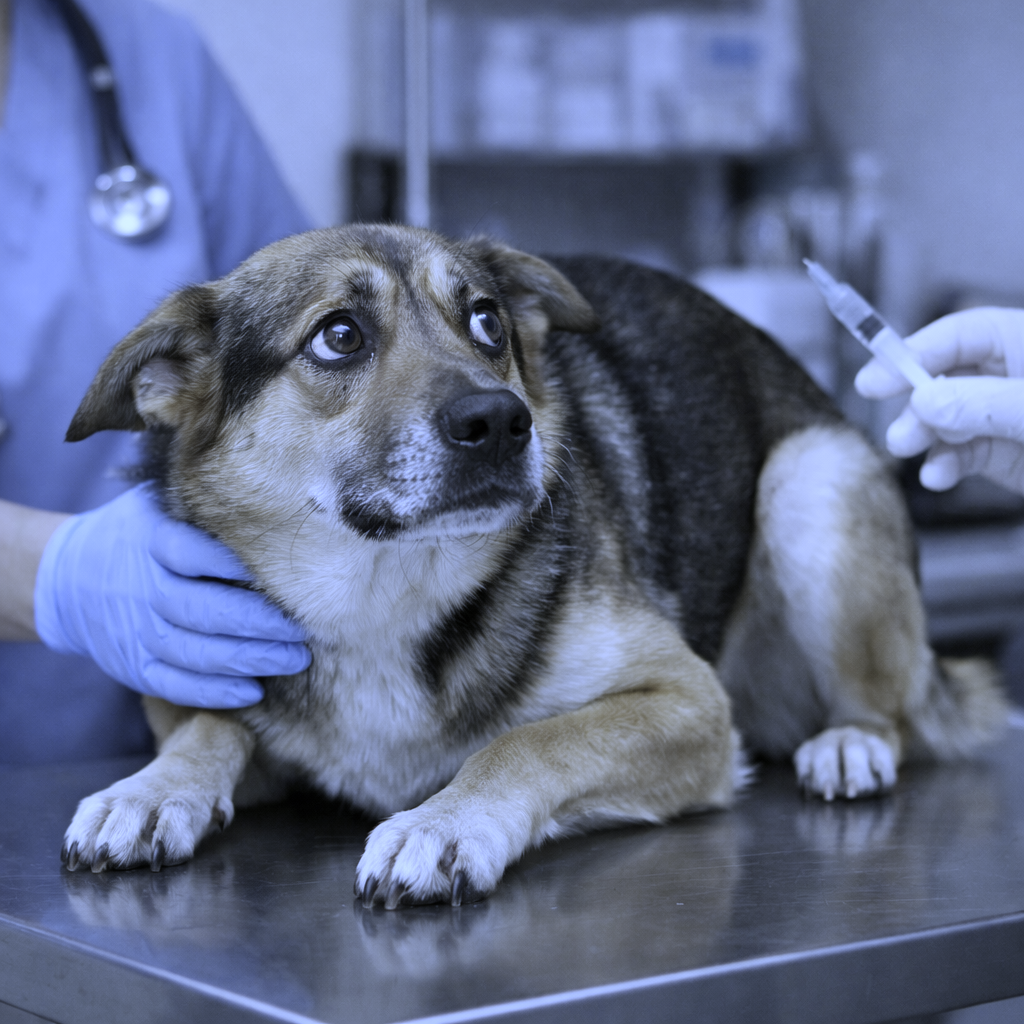
Behavioural euthanasia is one of the most difficult and least‑discussed welfare issues in the UK. While medical euthanasia is straightforward, behavioural euthanasia sits at the intersection of welfare decline, public safety, owner capability, and systemic pressures within shelters. Recent research from the University of Bristol (Source: Increased Intake and Use of Euthanasia in Dog Shelters in the UK and Republic of Ireland 2021–2023. H. Hale, P. McCormack and S. Mullan. MDPI: Journals, Animals, Volume 16, Issue 5 March 2026) reveals how these pressures have intensified as more dogs enter already overstretched Local Authority kennels.
One of the clearest drivers is behavioural deterioration caused by kennelling itself. Dogs in Local Authority facilities often live in small spaces with restricted access to exercise and the external environment. Over time, this confinement erodes their social attachments and increases stress, which contributes to reduced welfare and increased behavioural issues. These issues—frustration, fear, reactivity, and aggression—directly reduce a dog’s rehoming potential and place them at higher risk of euthanasia.
Breed trends also play a significant role. The study highlights a sharp rise in bull‑type breeds and XL Bullies entering the system, with XL Bully cases increasing from just one in 2021 to 150 in 2023 sec7. These breeds are often harder to place in rescue spaces and tend to stay in kennels far longer than others. Longer stays mean more behavioural decline, creating a cycle where the dogs most in need of support are the ones most likely to deteriorate.
Another major factor is sheer volume. Intake rose from 16,310 dogs in 2021 to 23,287 in 2023, pushing shelters to breaking point. Even though rehoming rates improved, the system simply cannot absorb the number of dogs entering it. As Paige McCormack notes, this is “a symptom of a much deeper crisis”. When kennels are full, dogs with behavioural challenges—especially those requiring experienced homes—are at the highest risk.
Finally, inconsistent policies across Local Authorities contribute to uneven outcomes. Only 23% of councils have formal euthanasia policies, meaning decisions vary widely depending on resources, risk tolerance, and available behavioural support. Without standardised guidance, dogs with similar behavioural profiles may face very different fates depending on where they are held.
Together, these factors create a landscape where behavioural euthanasia is not simply about a dog’s behaviour—it is about environment, capacity, breed trends, legislation, and the absence of a unified national system. As the Bristol team emphasises, without harmonised data collection and coordinated welfare strategies, the dogs most vulnerable to behavioural decline will continue to be the ones most at risk.
The Animal Welfare Act 2006 does not fully protect these dogs because it sets out broad welfare duties rather than specific safeguards against behavioural decline in kennels. While the Act requires animals to have their basic needs met, it does not guarantee access to behavioural rehabilitation, limit the length of time dogs spend in stressful kennel environments, or create consistent national standards for euthanasia decisions. As a result, dogs may still be legally euthanised when they are considered unsafe, not suitable for rehoming, or suffering, even where their behaviour has worsened because of the system itself.

Leave a Reply