
When Will Atherton lists his “dogs he wouldn’t own”, you’d assume he’d name a rather challenging breed — yet he picked spaniels (working and springer) in his recent YouTube video, and not for the first time.
He argues that, as a ‘behaviourist’, his role is essentially resolving canine behaviour problems when they escalate, and that spaniels “[…] are breeds that I see a lot in my behaviour work, which means that they do have the potential to go wrong.” I agree, they do, with the wrong type of training.
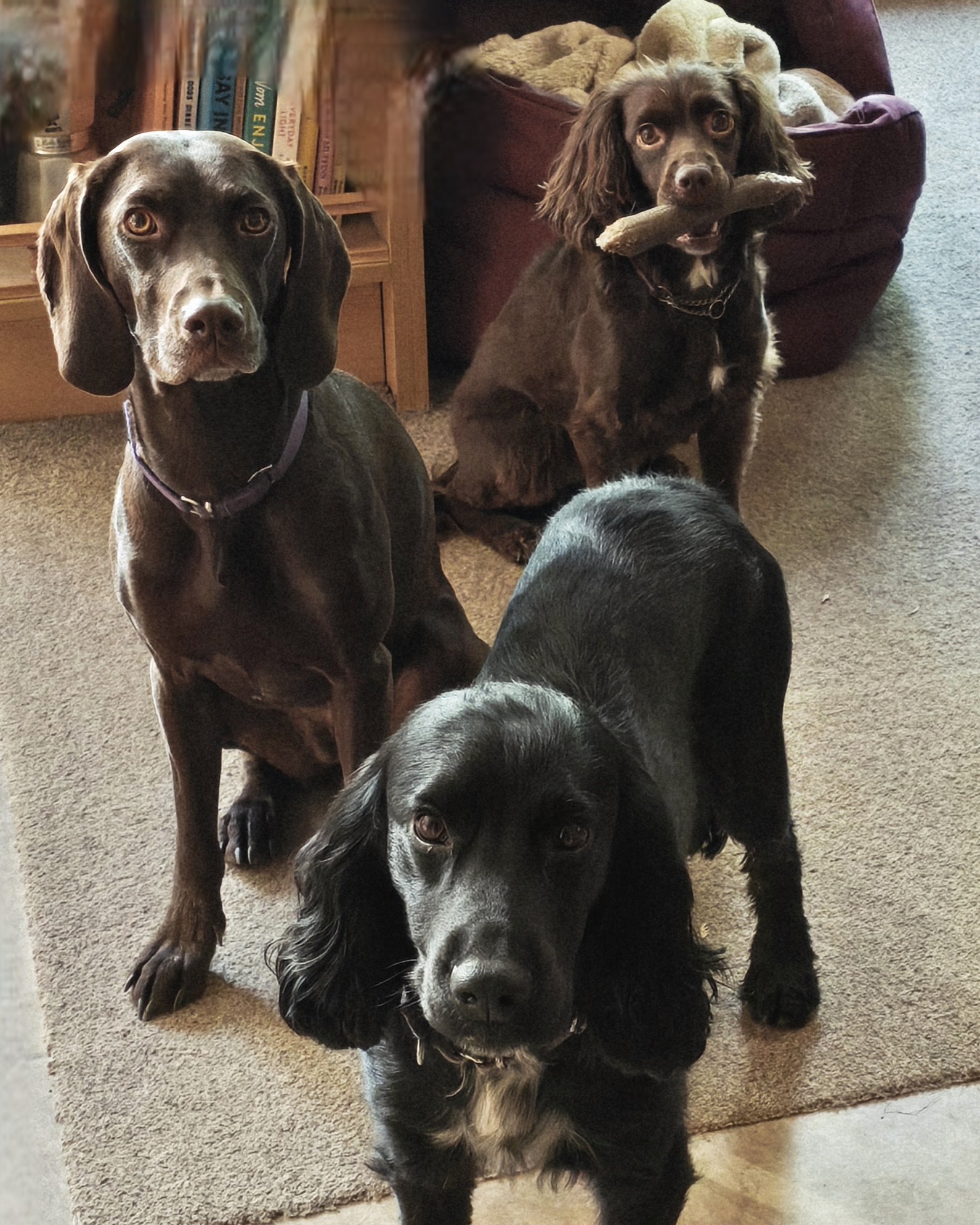
Owning two spaniels and a Weimaraner × Sprocker, I can confirm they need a particular style of ownership to truly thrive. Yet to his own admission he states, “they are breeds that are very, very trainable”. So why then does he think he could not train one to live with.
It’s normal for people to prefer or avoid certain breeds, but if he can’t get a spaniel to switch off, then I must ask — what can he do? He describes them as “[…] usually gentle. They are usually loving, but they are extremely high drive. They are extremely high energy.” and it’s this he claims he can’t cope with, not wanting to “come home to more high energy, more drama.” He continues that he wants to “[come] home to calm, relaxed, chilled out, well-behaved dogs.”
Spaniels can most definitely be ‘calm, relaxed, chilled out, well-behaved dogs’, but only with the right training, so this must be questionable statement from a dog trainer, sorry, ‘behaviourist’.
Gary Marriot of Brakenvale Gundogs, who’s spent years training spaniels for both the field and the family home, says, “Every dog should learn an off switch — it’s especially important for gundogs.” Gary knows first-hand that spaniels can be calm and chilled.
Spaniels are remarkably easy to train. Their gentle, relaxed demeanour is why they’re often chosen as assistance dogs for autistic individuals. Yet if he wouldn’t have one because he couldn’t train the off switch then his clients don’t stand much chance.
Ultimately, this isn’t about personal breed preference — that’s entirely valid — but about the implications of the reasoning behind it. To suggest that spaniels are inherently unable to ‘switch off’ overlooks both robust, practical training experience and the many calm, balanced spaniels living successfully as family dogs and assistance animals. If high drive alone places a breed beyond the reach of training, then the issue is not the dog, but the approach. Spaniels don’t lack an off switch; they simply require one to be taught — a fundamental expectation of any capable trainer, or behaviourist.
Leave a Reply